Garlicky Lacinato Kale and Bean Skillet: What Are Superfoods?
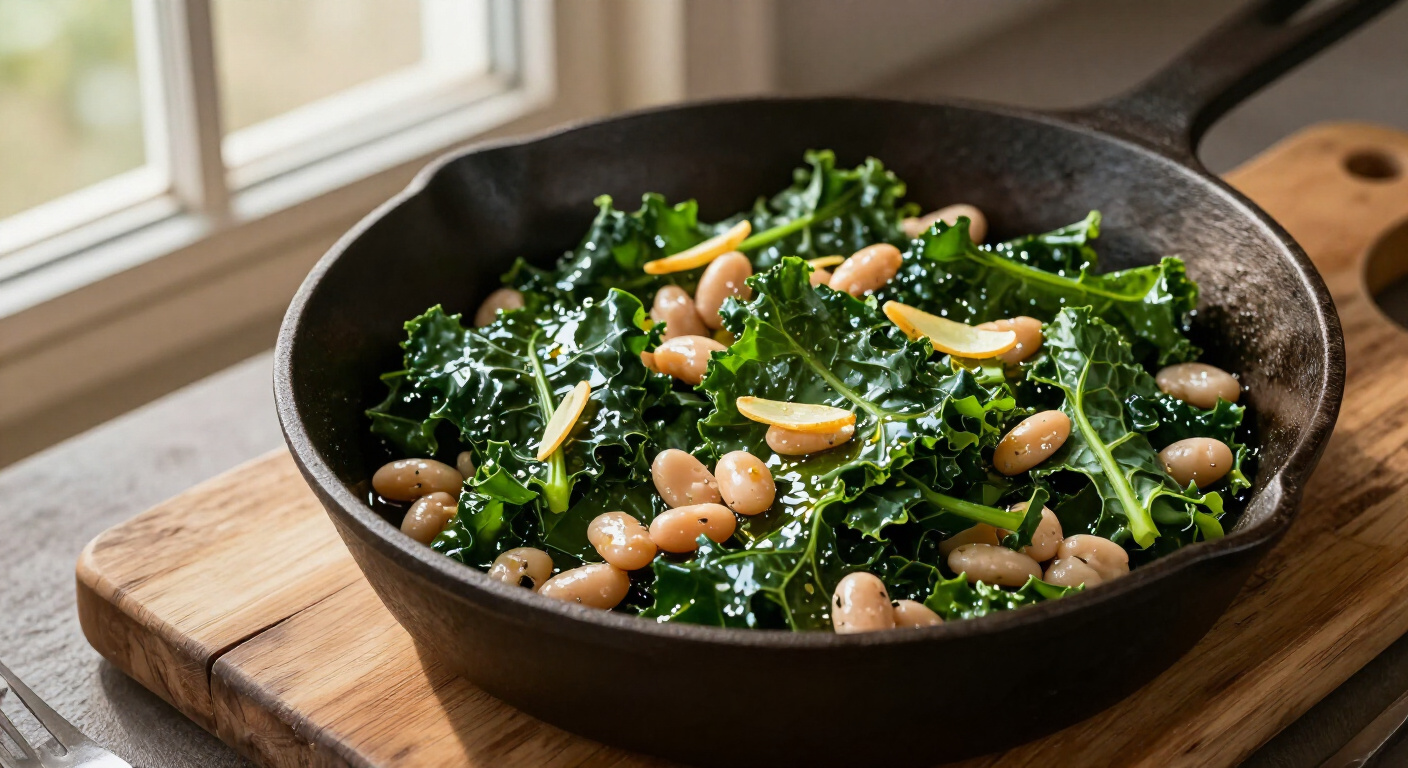
What are superfoods? Learn the meaning, then cook garlicky lacinato kale and beans in one skillet, silky and lemony on the table in 25 minutes.
Wondering what are superfoods? Garlic sizzles in hot olive oil, and my kitchen fills with a golden, nutty perfume. In just 25 minutes, one cast-iron pan turns tough, bitter greens into something silky, with no fussy steps. Make it on a busy weeknight when you want something green that still feels like care.
Why This Recipe Works
• Tear the kale into even two-inch pieces: Uniform pieces wilt at the same rate, so nothing turns mushy while another bite stays tough. Tearing by hand also gives the leaves ragged edges that catch the oil.
• Slice the garlic thin, cook it gently: Thin slices have more surface area, so they turn fragrant in a minute or two. Medium heat keeps them from scorching and leaving a sharp, bitter edge.
• Rinse canned beans before cooking: Rinsing washes away the starchy canning liquid and extra sodium. What's left heats through quickly and turns plump and creamy instead of gummy.
• Finish with lemon over low heat: Acid brightens the earthy kale and cuts its bitterness. Low heat keeps the citrus from cooking off, so the greens stay glossy and vivid.
Ingredients You'll Need
Lacinato Kale: This is dinosaur kale, with dark, bumpy, blue-green leaves that stay sturdy in a hot pan. It wilts into silky ribbons without going limp or mushy. Curly kale works as a substitute, or Swiss chard if you want something a little more tender.
Extra-Virgin Olive Oil: This is the fat that carries the garlic's flavor and gives every leaf a glossy coat. Choose a good bottle, since it's one of only a few ingredients you can actually taste. Avocado oil is a fine swap if you want something milder.
Garlic: Thin slices turn pale golden and smell toasty within a minute or two. Watch them closely, because garlic goes bitter in seconds once it darkens. If you're out, use ½ teaspoon of garlic powder stirred in with the kale.
Cannellini Beans: These are big, creamy white beans that turn plump and tender in the skillet. Drain and rinse them first to wash away the canning liquid and extra salt. Great Northern beans are a good stand-in, or chickpeas if you want a firmer bite.
Lemon: Fresh juice brightens the earthy kale and tames its bitter edge. Squeeze it in at the end over low heat so the flavor stays sharp and clean. A teaspoon of white wine vinegar works in a pinch.
Kosher Salt: Salt is what makes the greens taste like more than just kale. Kosher salt's coarse flakes are easy to pinch and sprinkle evenly across the pan. If you only have fine table salt, use about half the amount, since it's much saltier by volume.
Black Pepper: Freshly ground pepper adds a warm, slightly sharp bite that plays nicely against the lemon. Grind it right before tossing so the aroma stays bright. A pinch of red pepper flakes or ground white pepper will work if you're short on black.


How to Make It (Step by Step)
It all happens in one cast-iron skillet, from sizzling garlic to glossy, lemony greens. Even if kale intimidates you, this forgiving dish is one you'll nail on your first try.

- Warm 2 tablespoons extra-virgin olive oil in a cast-iron skillet over medium heat (350°F / 175°C) until it shimmers and ripples, 1-2 minutes. Keep the pan steady so the oil heats evenly.

- Add the thinly sliced garlic and stir until pale golden and fragrant, 1-2 minutes at medium heat (350°F / 175°C). Watch closely, because garlic burns quickly.

- Add the torn lacinato kale and toss until bright green and wilted, 3-4 minutes at medium-high heat (400°F / 200°C). The leaves should look soft but still hold their shape.

- Sprinkle in ¼ teaspoon kosher salt and ¼ teaspoon black pepper, then toss until evenly seasoned, 30-60 seconds at medium-high heat (400°F / 200°C). The greens should look glossy and deep green.

- Add the drained, rinsed cannellini beans and stir until heated through and tender, 2-3 minutes at medium heat (350°F / 175°C). The beans should look plump and creamy white.

- Lower the heat to low (300°F / 150°C), squeeze in the juice of half a lemon, and stir until glossy, about 30 seconds. Serve right away while the greens are still warm.

Recipe Notes
• Storage: Keep leftovers in an airtight container in the fridge for up to 3 days. This dish doesn't freeze well, since the kale turns soft and limp. Reheat in the skillet over medium heat with a splash of water, 2-3 minutes.
• Key substitution: No lacinato kale? Curly kale works beautifully. Just add about a minute more wilting time, since it's a bit sturdier and holds its color well.
• Make-ahead tip: Thinly slice the garlic and tear the kale up to a day ahead. Store the garlic covered in the fridge, and keep the dry kale in a zip bag with a paper towel.
• Common mistake: Leaving the tough center ribs in the leaves. Strip them out fully, even the thick bits near the base, or you'll get chewy bites that ruin the velvety texture.
Serving size: 1 portion · Calories: 310 · Total Fat: 14g · Saturated Fat: 2g · Carbs: 36g · Fiber: 11g · Sugar: 3g · Protein: 14g · Sodium: 420mg
Tips and Tricks
- Equipment: Reach for a heavy cast-iron skillet: Its thick base holds steady heat, so the garlic sizzles evenly and the kale wilts without scorching. Lighter pans lose heat fast the moment the greens hit.

- Temperature precision: Hold the kale step at 400°F / 200°C: That medium-high heat wilts the greens quickly while keeping them bright. Drop the heat too low and the kale steams into a dull, olive-drab pile.
- Common mistake: Dumping the kale in a tight mound: A packed pile traps steam, so the leaves stew and turn grey-green. Spread the torn pieces across the pan, then toss until they wilt.
- Flavour upgrade: Add a little lemon zest: Grate a pinch of zest from the lemon half before you juice it. Stir it in with the juice in step 6 for a brighter, more fragrant finish.
- Texture tip: Let the beans sit before stirring: After adding the beans, leave them untouched for 20 to 30 seconds. Their edges pick up a faint golden color, so they taste toasty and hold their shape instead of mashing.

Frequently Asked Questions
Can I swap the cannellini beans for another bean if I need a substitute?
Yes, use one 15-ounce can of great northern, navy, or chickpeas, drained and rinsed, in the same amount. Chickpeas add a nuttier bite, while navy beans stay the creamiest.
Can I store leftover cannellini beans separately from the kale to keep them fresh longer?
Yes, cool the beans and greens separately, then refrigerate the beans in an airtight container for up to 3 days. Freeze plain cooked beans in a sealed bag for up to 3 months, and warm them in a small pan over medium heat until steaming.
Why do my kale leaves turn gray and soggy instead of sautéing?
Your pan is probably overcrowded, which traps steam and releases liquid. Use a wide cast-iron skillet and add the kale in two batches if needed, watching for bright green leaves with lightly browned edges.
What to Serve With This
- Crusty Sourdough with Flaky Salt: A crackling, chewy slice soaks up the lemony garlic oil left in the pan.
- Creamy Parmesan Polenta: Its silky, mellow softness balances the lemon's sharpness and the kale's earthy bite.
- Crispy Roasted Potato Wedges: Golden, crunchy edges contrast with the tender beans and soft, glossy greens.
- Cucumber and Tomato Salad: Cool, crisp, and lightly vinegared, it refreshes the warm skillet with a bright, clean bite.

Garlicky Lacinato Kale and Bean Skillet: What Are Superfoods?
Lunch / American
- Prep
- 10 min
- Cook
- 15 min
- Total
- 25 min
- Servings
- 2
- Calories
- 310 kcal
Ingredients
- 1 bunch lacinato kale (about 8 ounces), stems removed, leaves torn into 2-inch pieces
- 2 tablespoons extra-virgin olive oil
- 3 garlic cloves, thinly sliced
- 1 can (15 ounces) cannellini beans, drained and rinsed
- ½ lemon, juiced
- ¼ teaspoon kosher salt
- ¼ teaspoon black pepper, freshly ground
Instructions
- Warm 2 tablespoons extra-virgin olive oil in a cast-iron skillet over medium heat (350°F / 175°C) until it shimmers and ripples, 1-2 minutes. Keep the pan steady so the oil heats evenly.
- Add the thinly sliced garlic and stir until pale golden and fragrant, 1-2 minutes at medium heat (350°F / 175°C). Watch closely, because garlic burns quickly.
- Add the torn lacinato kale and toss until bright green and wilted, 3-4 minutes at medium-high heat (400°F / 200°C). The leaves should look soft but still hold their shape.
- Sprinkle in ¼ teaspoon kosher salt and ¼ teaspoon black pepper, then toss until evenly seasoned, 30-60 seconds at medium-high heat (400°F / 200°C). The greens should look glossy and deep green.
- Add the drained, rinsed cannellini beans and stir until heated through and tender, 2-3 minutes at medium heat (350°F / 175°C). The beans should look plump and creamy white.
- Lower the heat to low (300°F / 150°C), squeeze in the juice of half a lemon, and stir until glossy, about 30 seconds. Serve right away while the greens are still warm.
Share this article
About the author
Elena Marquez
Elena came back to the desert after her mother's stroke and stayed for the garden that was dying without her. Bringing the greens back to life brought her mother back a little too. She cooks them in cast iron by the window, fierce about every leaf, because she knows what it cost to grow them.