Smoky Kale and White Bean Skillet: Best of Our Vegan Recipes
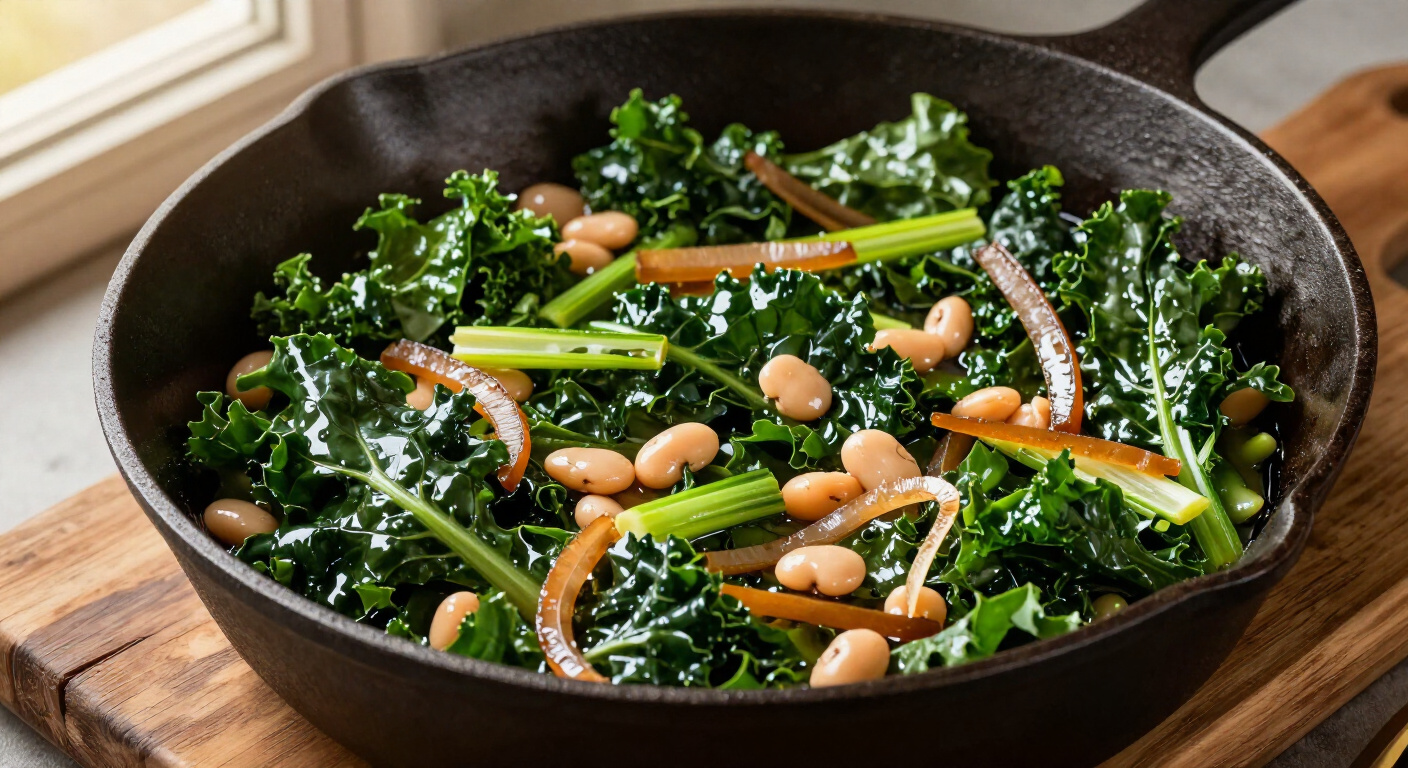
Vegan recipes don't get easier: smoky kale, chard and creamy white beans sizzle in one cast-iron skillet, ready in 35 minutes. Cook it tonight.
Smoky garlic sizzles in cast iron as kale melts into creamy beans: a glossy, lemony dinner in 35 minutes. Of all my vegan recipes, this one needs only one skillet and no fuss. Make it on any tired weeknight.
Blooming the paprika in hot oil unlocks its smoky depth, and cooking chard stems before the leaves keeps every bite tender. A final squeeze of lemon wakes the whole skillet up.
Ingredients You'll Need
Extra-Virgin Olive Oil: This is cold-pressed olive oil with a grassy, peppery bite. It carries the smoky paprika into every leaf and keeps the cast iron slick. Avocado oil works in a pinch, though you'll lose that fruity edge.
Yellow Onion: A plain, sturdy yellow onion turns sweet and jammy with a little time. Thin half-moons melt into the greens instead of sitting in chunky rings. A sweet onion or two big shallots will do the job nicely.
Garlic: Fresh cloves give a sharp, fragrant punch that jarred garlic just can't match. Mincing them fine spreads that warmth through the whole skillet. If you're out, ½ teaspoon garlic powder added with the broth will rescue you.
Lacinato Kale: Also called Tuscan or dinosaur kale, it has dark, bumpy, tender leaves. It holds its shape and stays velvety rather than turning soggy. Curly kale is a fine swap, so just chop it a little smaller.
Swiss Chard: These are silky leaves on crisp, juicy stems. I save every stem from my garden beds. They add crunch, and the leaves bring a mild, earthy sweetness. Spinach can stand in for the leaves, and celery can replace the stems.
Cannellini Beans: These big, creamy Italian white beans turn this into a real, filling dinner. Rinsing them washes off the starchy can liquid so the broth stays clean. Great Northern beans or chickpeas are the easiest backups.
Low-Sodium Vegetable Broth: Broth gives the beans a flavorful little bath to soak up. Low-sodium keeps you in charge of the salt. Water plus a splash of soy sauce works when the pantry's bare.
Smoked Paprika: These ground, smoke-dried peppers taste like a campfire in the best way. They give a meatless skillet deep, almost bacon-y warmth. Regular paprika with a pinch of cumin gets you close.
Red Pepper Flakes: These crushed dried chiles bring gentle, lingering heat. They balance the sweet onions and keep each bite lively. A pinch of cayenne or a dash of hot sauce will do the trick.
Fresh Lemon Juice: Bright, sour and sunny, this is the final wake-up call. It cuts through the rich beans and lifts the earthy greens. Red wine vinegar or apple cider vinegar is a solid second choice.
Kosher Salt: These coarse, clean-tasting flakes are easy to pinch and control. Salt makes the greens taste greener and the beans taste creamier. If you only have table salt, use about half as much.
Freshly Ground Black Pepper: Cracked right before cooking, it smells floral and warm. It adds a soft background bite that ties everything together. Pre-ground pepper works, though it's milder, so add a touch more.


How to Make It (Step by Step)
Everything happens in one cast-iron skillet: soften the onions, bloom the spices, wilt the greens, then simmer them with creamy beans.
Even if you've never cooked a pile of greens before, you'll get a glossy, fragrant skillet on your first try.

- Warm the olive oil in a 12-inch cast-iron skillet until it shimmers and ripples when you tilt the pan, 2-3 minutes at medium heat (350°F / 175°C). Patience here pays off. A properly hot pan keeps everything from sticking.

- Add the onion half-moons and stir now and then until they're soft, glossy and amber-brown, 7-9 minutes at medium heat (350°F / 175°C). Your kitchen will smell sweet and toasty. That's the base of the whole dish.

- Stir in the garlic, smoked paprika and red pepper flakes until fragrant and brick-red, 30-60 seconds at medium heat (350°F / 175°C). Keep the spoon moving. Garlic turns bitter fast if it scorches.

- Toss in the sliced chard stems and cook until they're tender-crisp and glossy, 2-3 minutes at medium heat (350°F / 175°C). I never throw these out. They add a lovely, gentle crunch.

- Pile in the chopped kale and chard leaves a handful at a time, turning until wilted and deep, glossy green, 3-4 minutes at medium-high heat (375°F / 190°C). It looks like too much at first. Trust me, it collapses beautifully.

- Add the cannellini beans and vegetable broth, then simmer until bubbling and the broth reduces by about half, 5-6 minutes at medium-high heat (375°F / 190°C). Stir gently. You want the beans whole and creamy, not mashed.

- Season with salt, black pepper and lemon juice, tossing until everything glistens and tastes bright, about 1 minute at low heat (250°F / 120°C). Taste a leaf. Add a pinch more salt if it needs it, then bring the skillet straight to the table.

Leftovers keep four days refrigerated; reheat gently in the skillet with a splash of broth. Swap spinach if chard's missing, slice onions a day ahead, and dry your greens well so they sizzle, not steam.
Serving size: 1 portion · Calories: 380 · Total Fat: 13g · Saturated Fat: 2g · Carbs: 46g · Fiber: 12g · Sugar: 4g · Protein: 16g · Sodium: 690mg
Tips and Tricks
- Equipment: Reach for a 12-inch cast-iron skillet: It holds steady heat, so onions brown evenly. The wide base gives a mountain of greens room to wilt.
- Temperature precision: Hold the onions at medium (350°F / 175°C): Any hotter and the edges scorch before the centers soften. Give them the full 7-9 minutes to turn sweet and amber.

- Common mistake: Dumping all the greens in at once: A packed pan drops in temperature fast. Add kale and chard leaves a handful at a time. Let each batch collapse before the next.
- Flavour upgrade: Finish with a thread of good olive oil: Drizzle a little extra-virgin olive oil right before serving. It turns peppery and fragrant against the warm, smoky greens.
- Texture tip: Fold the beans, don't stir hard: Turn the cannellini beans gently while the broth reduces. They stay whole and creamy, and the broth turns silky.

Frequently Asked Questions
Can I use chickpeas or butter beans instead of the cannellini beans?
Yes. Use two 15-ounce cans of chickpeas or butter beans, drained and rinsed, or 3 cups home-cooked beans. Chickpeas stay firmer, so add an extra ¼ cup vegetable broth and simmer about 2 minutes longer.
Can I freeze this kale and white bean skillet for later?
Yes, cool it completely, then freeze flat in airtight bags for up to 3 months; thaw overnight in the fridge and eat within 2 days. Rewarm in the cast-iron skillet over medium heat for 5-6 minutes, stirring gently, then brighten with fresh lemon.
Why did my garlic and smoked paprika turn bitter and dark brown?
The pan was too hot or the spices sat still, so they scorched in seconds; drop to medium heat and keep stirring for just 30-60 seconds, pulling the skillet off the burner if needed. Look for a fragrant, brick-red color, and if it smells acrid or turns black, wipe the skillet and start over.
What to Serve With This
- Garlic-Rubbed Sourdough Toast: Its crackly, golden crust is perfect for sweeping up the smoky broth and creamy beans.
- Creamy Soft Polenta: Velvety, mellow polenta cushions the lemony greens and softens every fiery fleck of red pepper.
- Shaved Fennel and Orange Salad: Crisp, juicy, anise-sweet bites cut through the rich beans with a bright, cooling crunch.
- Roasted Sweet Potato Wedges: Caramelized, honey-sweet edges balance the paprika's smoke and the greens' gentle bitterness.

Smoky Kale and White Bean Skillet: Best of Our Vegan Recipes
Dinner / American
- Prep
- 15 min
- Cook
- 20 min
- Total
- 35 min
- Servings
- 4
- Calories
- 380 kcal
Ingredients
- 3 tablespoons extra-virgin olive oil
- 1 large yellow onion, thinly sliced into half-moons
- 4 cloves garlic, finely minced
- 1 large bunch lacinato kale (about 10 ounces), stems removed, leaves roughly chopped
- 1 bunch Swiss chard (about 8 ounces), stems thinly sliced, leaves roughly chopped
- 2 cans (15 ounces each) cannellini beans, drained and rinsed
- 1 cup low-sodium vegetable broth
- 1 teaspoon smoked paprika
- ½ teaspoon red pepper flakes
- 1 tablespoon fresh lemon juice
- ¾ teaspoon kosher salt
- ¼ teaspoon freshly ground black pepper
Instructions
- Warm the olive oil in a 12-inch cast-iron skillet until it shimmers and ripples when you tilt the pan, 2-3 minutes at medium heat (350°F / 175°C). Patience here pays off. A properly hot pan keeps everything from sticking.
- Add the onion half-moons and stir now and then until they're soft, glossy and amber-brown, 7-9 minutes at medium heat (350°F / 175°C). Your kitchen will smell sweet and toasty. That's the base of the whole dish.
- Stir in the garlic, smoked paprika and red pepper flakes until fragrant and brick-red, 30-60 seconds at medium heat (350°F / 175°C). Keep the spoon moving. Garlic turns bitter fast if it scorches.
- Toss in the sliced chard stems and cook until they're tender-crisp and glossy, 2-3 minutes at medium heat (350°F / 175°C). I never throw these out. They add a lovely, gentle crunch.
- Pile in the chopped kale and chard leaves a handful at a time, turning until wilted and deep, glossy green, 3-4 minutes at medium-high heat (375°F / 190°C). It looks like too much at first. Trust me, it collapses beautifully.
- Add the cannellini beans and vegetable broth, then simmer until bubbling and the broth reduces by about half, 5-6 minutes at medium-high heat (375°F / 190°C). Stir gently. You want the beans whole and creamy, not mashed.
- Season with salt, black pepper and lemon juice, tossing until everything glistens and tastes bright, about 1 minute at low heat (250°F / 120°C). Taste a leaf. Add a pinch more salt if it needs it, then bring the skillet straight to the table.
Share this article
About the author
Elena Marquez
Elena came back to the desert after her mother's stroke and stayed for the garden that was dying without her. Bringing the greens back to life brought her mother back a little too. She cooks them in cast iron by the window, fierce about every leaf, because she knows what it cost to grow them.