Smoky Kale Skillet Packed with Plant Based Protein Sources
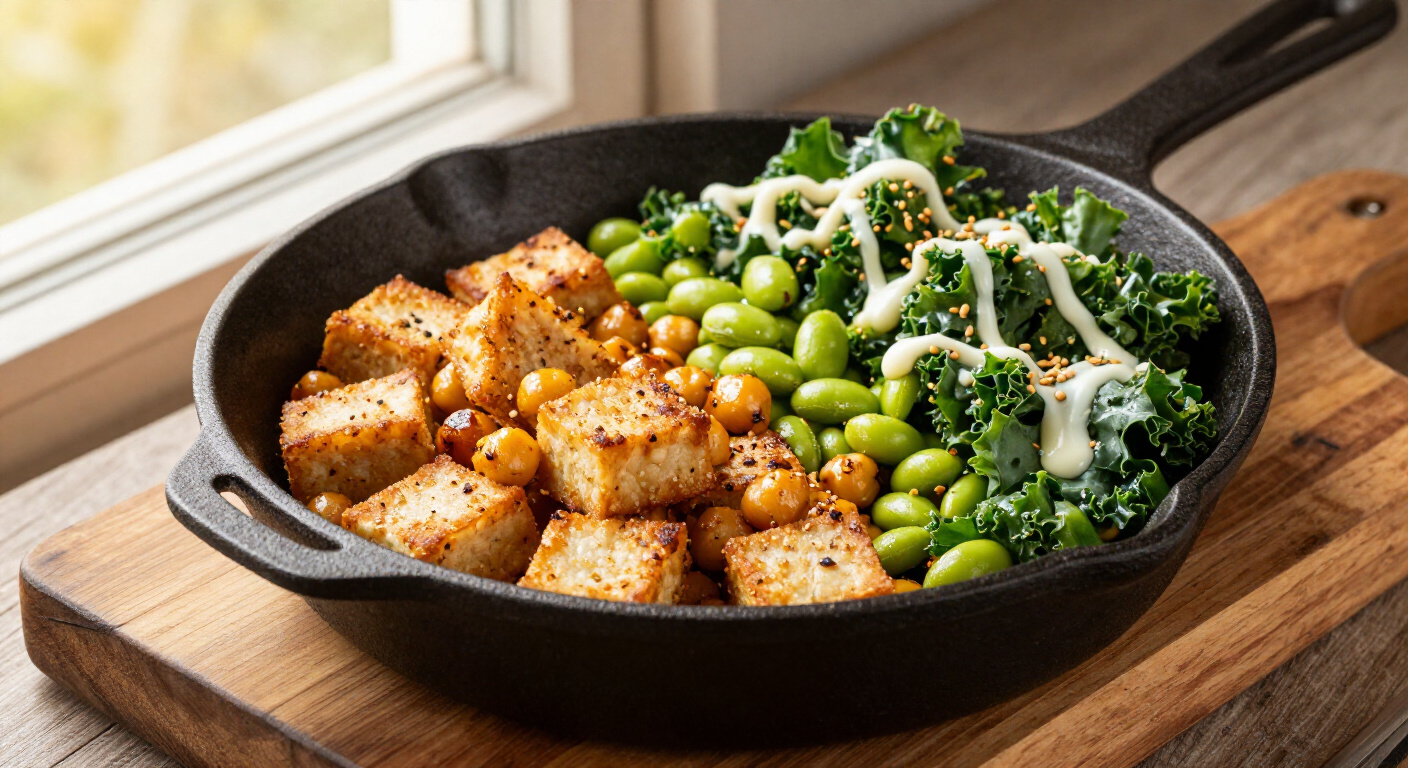
Plant based protein sources meet in one smoky cast-iron skillet: crisp tempeh, chickpeas, edamame and kale, ready in 40 minutes. Get the recipe.
Golden, crackling cubes and glossy greens sizzle in cast iron, turning plant based protein sources into a smoky, hearty skillet in 40 minutes. One pan layers four proteins under a silky drizzle. Make it for busy weeknights or meal prep.
Searing the tempeh and blistering the chickpeas separately keeps every bite crisp. Those browned bits flavor the onions, spices and kale, so each protein tastes deeply smoky, never steamed.
Ingredients You'll Need
Tempeh: Tempeh is fermented soybeans pressed into a firm, nutty cake. It brings about 19 grams of protein per 100g, and its ½-inch cubes sear golden-brown and crisp on every face. Extra-firm tofu, pressed and cubed, is the best swap, though it browns more slowly.
Chickpeas: Canned chickpeas offer around 7 grams of protein per 100g once cooked. Patting them dry is the secret, because dry skins blister and crackle in hot cast iron. White beans work in a pinch but stay softer.
Shelled Edamame: These young green soybeans carry roughly 11 grams of protein per 100g. They turn bright, plump and glossy in the pan, adding a sweet pop. Frozen peas are the closest swap, with a bit less protein.
Lacinato Kale: Lacinato kale has dark, bumpy leaves that hold up beautifully to heat. It adds iron, calcium and a few grams of protein per 100g, and it soaks up every smoky pan juice. Curly kale or Swiss chard leaves make a fine substitute.
Olive Oil: Olive oil is the fruity fat that carries all that heat into the tempeh and chickpeas. It builds the crust and helps the spices bloom. Avocado oil is the best swap if you want a higher smoke point.
Yellow Onion: A small yellow onion, diced, turns soft, translucent and sweet. It scrapes up the browned tempeh bits and builds the skillet's savory base. A shallot or white onion works just as well.
Garlic: Fresh garlic cloves, minced fine, wake up the whole pan in seconds. They add a warm, sharp bite that balances the earthy beans. Use ½ teaspoon garlic powder if you're out, and add it with the spices.
Smoked Paprika: Smoked paprika is ground peppers dried over wood smoke. It gives the skillet its deep, campfire color and flavor. Regular paprika plus a pinch of chipotle powder comes close.
Ground Cumin: Ground cumin is earthy, warm and a little citrusy. It pairs perfectly with chickpeas and deepens the smoky paprika. Ground coriander is a softer but lovely substitute.
Kosher Salt: Kosher salt has coarse flakes that are easy to pinch and spread evenly. It draws flavor out of the kale and sharpens every protein. Use about half as much fine sea salt instead.
Black Pepper: Black pepper adds a gentle, woody heat. It cuts through the creamy tahini and rich beans. White pepper works, though it tastes a bit more floral.
Tahini: Tahini is ground sesame seed paste, rich and slightly bitter. It brings about 17 grams of protein per 100g and makes the drizzle velvety. Smooth sunflower seed butter is the best nut-free swap.
Fresh Lemon Juice: Fresh lemon juice brightens the tahini and turns it pale and silky. That tang lifts the heavy, smoky flavors. Lime juice or a splash of white wine vinegar works too.
Low-Sodium Soy Sauce: Low-sodium soy sauce is fermented soybean seasoning with deep umami. It gives the drizzle a savory backbone without oversalting the skillet. Tamari is the best gluten-free substitute.
Warm Water: Warm water loosens the thick tahini into a slow, pourable ribbon. Warmth keeps the sauce smooth instead of seizing. Unsweetened plant milk makes a creamier stand-in.
Hemp Hearts: Hemp hearts are shelled hemp seeds, soft and nutty. They pack about 31 grams of protein per 100g, the highest here, and add a delicate crunch on top. Toasted sesame seeds or pumpkin seeds are great swaps.


How to Make It (Step by Step)
This all happens in one cast-iron skillet: sear the tempeh, blister the chickpeas, then fold in the edamame and kale under a silky tahini drizzle.
Even if you've never cooked tempeh before, you'll pull off golden, crisp-edged cubes and glossy greens on your first try.

- Whisk the tahini, fresh lemon juice and low-sodium soy sauce in a small bowl. Add 2 to 3 tablespoons of warm water, a spoonful at a time, until the sauce turns pale and silky. It should pour in a slow ribbon. Allow 2-3 minutes with water at 100°F / 38°C.

- Heat 1 tablespoon of olive oil in a cast-iron skillet. Add the ½-inch tempeh cubes in a single layer. Sear them until every face is deep golden-brown and crisp, 6-8 minutes at medium-high heat (400°F / 200°C). Turn the cubes only when they release easily. Move them to a plate.

- Pour the remaining tablespoon of oil into the same skillet. Add the dry chickpeas and let them sizzle until their skins blister and turn golden, 7-9 minutes at medium-high heat (400°F / 200°C). Shake the pan now and then. Listen for that happy little crackle.

- Lower the heat and stir in the diced onion. Cook until the pieces turn soft, translucent and sweet-smelling, 4-5 minutes at medium heat (350°F / 175°C). Scrape up any browned tempeh bits as you go.

- Add the minced garlic, smoked paprika and ground cumin. Stir constantly until the spices smell smoky and fragrant, 30-60 seconds at medium heat (350°F / 175°C). Don't walk away here. Garlic burns fast.

- Stir in the shelled edamame. Cook until the beans turn bright green and are warmed through, 3-4 minutes at medium heat (350°F / 175°C). They should look plump and glossy.

- Pile in the torn lacinato kale with the kosher salt and black pepper. Toss until the leaves collapse, turn deep glossy green and feel tender, 2-3 minutes at medium heat (350°F / 175°C). Every leaf counts. Coat them all in those pan juices.

- Return the seared tempeh to the skillet. Fold everything together until the tempeh is hot and the cubes are still crisp-edged, 1-2 minutes at medium heat (350°F / 175°C). Taste and adjust the salt.

- Pull the skillet off the burner. Drizzle the tahini sauce over the top and sprinkle with hemp hearts. Serve while the drizzle is still loose and creamy, within 2-3 minutes as the pan cools to about 160°F / 70°C.

Leftovers keep three days in the fridge; reheat them in a hot cast-iron skillet to re-crisp the tempeh. Store the tahini drizzle separately so it stays silky.
Serving size: 1 portion · Calories: 410 · Total Fat: 22g · Saturated Fat: 3.5g · Carbs: 34g · Fiber: 9g · Sugar: 4g · Protein: 26g · Sodium: 520mg
Tips and Tricks
- Equipment: Use a heavy cast-iron skillet: Cast iron holds a steady, fierce heat. Your ½-inch tempeh cubes sear deep golden-brown instead of steaming. One pan carries every browned bit forward into the onions and kale.

- Temperature precision: Drop to 350°F before the garlic goes in: Sear the tempeh and chickpeas at a hot 400°F / 200°C. Then lower to medium, about 350°F / 175°C, for onion and spices. Garlic and smoked paprika scorch fast at full heat. Thirty seconds too hot tastes bitter.
- Common mistake: Flipping the tempeh too soon: Tugging at stuck cubes tears off their crust. Leave them alone until they release easily. Crowding the pan does the same damage, so keep one roomy layer.
- Flavour upgrade: A little lemon zest over the drizzle: Grate a few curls of zest over the tahini right before serving. It wakes up the smoky paprika and earthy kale. Bright, fragrant, and so simple.
- Texture tip: Pat the chickpeas bone-dry: Any water left on them turns to steam and stops the blistering. Roll them in a towel until the skins look matte. Then they crackle, split and turn golden and crunchy.

Frequently Asked Questions
How can I make this skillet soy-free without losing much plant based protein?
Replace the 8 ounces tempeh with a second 15-ounce can of chickpeas, seared the same way, and swap the edamame for 1 cup shelled fava beans or green peas. Use 1 tablespoon coconut aminos instead of soy sauce in the tahini drizzle.
Can I freeze this skillet or prep the proteins ahead of time?
Sear the tempeh and blister the chickpeas up to 2 days ahead and refrigerate them airtight; the cooked skillet without kale freezes up to 2 months. Thaw overnight in the fridge, then rewarm in cast iron over medium heat 5-6 minutes before wilting in fresh kale.
Why did my tahini drizzle turn thick and clumpy instead of silky?
Tahini seizes when the lemon juice hits it, so keep whisking and add warm water one spoonful at a time until the sauce turns pale and pours in a slow ribbon. If it stiffens while the skillet cooks, whisk in another teaspoon of warm water before drizzling.
What to Serve With This
- Quick-Pickled Red Onions: Their bright, tangy snap cuts right through the nutty tahini and smoky paprika in every forkful.
- Lemony Cucumber Tomato Salad: Cool, juicy cucumbers and sweet tomatoes bring a crisp, refreshing contrast to the warm, hearty skillet.
- Creamy Cauliflower Mash: This velvety, mellow mash cradles the crackly tempeh cubes and blistered chickpeas beautifully.
- Warm Pita Wedges: Soft, toasty pita is perfect for swiping up every last drop of that silky tahini drizzle.

Smoky Kale Skillet Packed with Plant Based Protein Sources
Lunch / American
- Prep
- 15 min
- Cook
- 25 min
- Total
- 40 min
- Servings
- 4
- Calories
- 410 kcal
Ingredients
- 8 ounces tempeh, cut into ½-inch cubes
- 1 can (15 ounces) chickpeas, drained, rinsed and patted dry
- 1 cup shelled edamame, thawed if frozen
- 1 bunch lacinato kale (about 8 ounces), stems removed, leaves torn into bite-size pieces
- 2 tablespoons olive oil
- 1 small yellow onion, diced
- 3 cloves garlic, minced
- 1 teaspoon smoked paprika
- ½ teaspoon ground cumin
- ½ teaspoon kosher salt
- ¼ teaspoon black pepper
- 3 tablespoons tahini
- 2 tablespoons fresh lemon juice
- 1 tablespoon low-sodium soy sauce
- 2 to 3 tablespoons warm water
- 2 tablespoons hemp hearts
Instructions
- Whisk the tahini, fresh lemon juice and low-sodium soy sauce in a small bowl. Add 2 to 3 tablespoons of warm water, a spoonful at a time, until the sauce turns pale and silky. It should pour in a slow ribbon. Allow 2-3 minutes with water at 100°F / 38°C.
- Heat 1 tablespoon of olive oil in a cast-iron skillet. Add the ½-inch tempeh cubes in a single layer. Sear them until every face is deep golden-brown and crisp, 6-8 minutes at medium-high heat (400°F / 200°C). Turn the cubes only when they release easily. Move them to a plate.
- Pour the remaining tablespoon of oil into the same skillet. Add the dry chickpeas and let them sizzle until their skins blister and turn golden, 7-9 minutes at medium-high heat (400°F / 200°C). Shake the pan now and then. Listen for that happy little crackle.
- Lower the heat and stir in the diced onion. Cook until the pieces turn soft, translucent and sweet-smelling, 4-5 minutes at medium heat (350°F / 175°C). Scrape up any browned tempeh bits as you go.
- Add the minced garlic, smoked paprika and ground cumin. Stir constantly until the spices smell smoky and fragrant, 30-60 seconds at medium heat (350°F / 175°C). Don't walk away here. Garlic burns fast.
- Stir in the shelled edamame. Cook until the beans turn bright green and are warmed through, 3-4 minutes at medium heat (350°F / 175°C). They should look plump and glossy.
- Pile in the torn lacinato kale with the kosher salt and black pepper. Toss until the leaves collapse, turn deep glossy green and feel tender, 2-3 minutes at medium heat (350°F / 175°C). Every leaf counts. Coat them all in those pan juices.
- Return the seared tempeh to the skillet. Fold everything together until the tempeh is hot and the cubes are still crisp-edged, 1-2 minutes at medium heat (350°F / 175°C). Taste and adjust the salt.
- Pull the skillet off the burner. Drizzle the tahini sauce over the top and sprinkle with hemp hearts. Serve while the drizzle is still loose and creamy, within 2-3 minutes as the pan cools to about 160°F / 70°C.
Share this article
About the author
Elena Marquez
Elena came back to the desert after her mother's stroke and stayed for the garden that was dying without her. Bringing the greens back to life brought her mother back a little too. She cooks them in cast iron by the window, fierce about every leaf, because she knows what it cost to grow them.